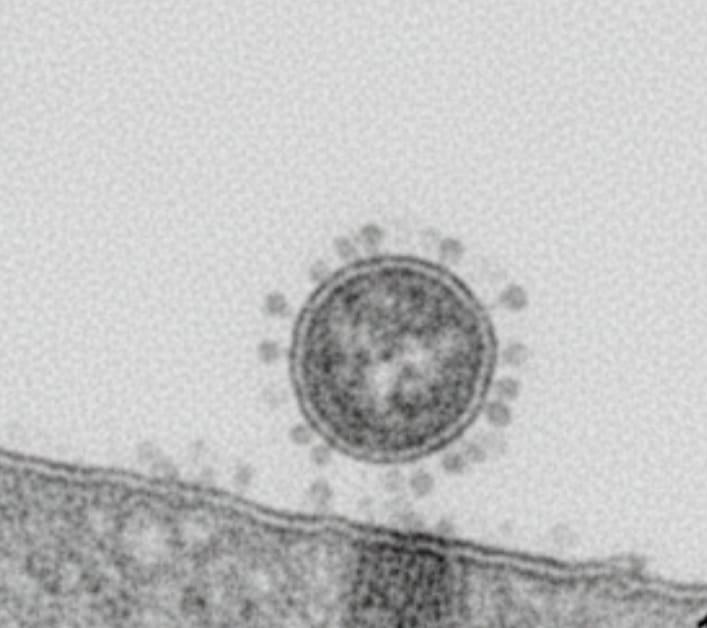
Why Did Some Countries Experience Higher Mortality During the COVID-19 Pandemic
The COVID-19 pandemic affected countries very unevenly. Between 2020 and 2021, the number of deaths directly attributed to the virus reached approximately 5.4 million worldwide, but excess mortality estimates—meaning the excess deaths compared to a normal period—range between 12 and 22 million. These additional deaths were not evenly distributed. Some countries, particularly in Latin America and the former Soviet sphere, recorded particularly high rates, while others, such as those in Oceania or Africa, were less affected.
A recent study reveals that differences in mortality are not explained solely by the number of reported cases or lockdown measures. Socioeconomic conditions and healthcare system characteristics, often grouped under the term national framework conditions, play a decisive role. To understand these disparities, researchers used advanced artificial intelligence methods. They analyzed more than 1,400 socioeconomic indicators from the World Bank and then reduced them to a few key dimensions using a technique called nonlinear compression. This approach captures the complex structures that influence countries’ vulnerability to a health crisis.
The results show that these compressed framework conditions explain nearly half of the variations in excess mortality observed worldwide. They reveal, in particular, that upper-middle-income countries often experienced higher excess mortality than low- or high-income countries, despite reporting fewer cases than the latter. This suggests that structural vulnerabilities, such as the composition of the workforce, healthcare spending, or dependence on certain economic sectors, amplified the pandemic’s impact.
The analysis highlights factors often overlooked by traditional indicators. For example, the age of the working population, the distribution of jobs between primary and tertiary sectors, and dependence on tourism and foreign aid strongly influence a country’s ability to withstand a crisis. Countries whose economies rely on undiversified industries or have fragile healthcare systems were particularly vulnerable.
The study also emphasizes that classic indicators, such as gross domestic product or life expectancy, are insufficient to explain mortality differences. By combining this data with information on virus spread and vaccination policies, researchers were able to identify specific risk profiles. Some countries, despite reporting a similar number of cases, experienced very different outcomes due to their underlying socioeconomic structures.
These findings offer a new perspective on resilience to pandemics. They show that preparedness depends not only on immediate healthcare capacities but also on the strength of economic and social foundations. To reduce inequalities in future crises, it will be essential to strengthen these structural aspects, especially in middle-income countries where vulnerabilities are often most pronounced.
Source Credits
Primary Source
DOI: https://doi.org/10.1186/s44263-026-00255-0
Title: Mortality risk during the COVID-19 pandemic is shaped by human development
Journal: BMC Global and Public Health
Publisher: Springer Science and Business Media LLC
Authors: Kolja Nenoff; Sarah Habershon; Miguel D. Mahecha; Sabine Attinger; Khalil Teber; Guido Kraemer
Image Source and Rights
Source de l’image non disponible